-
Private Ac Car, Airlines
-
5 Stars Hotels
-
416 metres
-
Delhi
-
October, November, December, January, February, March
-
Heritage, Culture & History
-
Breakfast and Dinner
-
English, Spanish, French, Chinese
-
Easy
-
2-15
-
5
-
65
Overview
Make sure to mark your calendars! The best time to experience the Pushkar Fair in 2025 is from October 30th to November 4th. We recommend planning your visit during these dates to fully enjoy all the festivities in Pushkar. This itinerary serves as a guide and can be tailored to meet your preferences. If you’d like to know more, don’t hesitate to contact us.
Pushkar Fair 2025 : October 30th to November 5th, 2025
Pushkar Fair 2026: November 17th to November 24th, 2026
Pushkar Fair 2027: November 6th to November 14th, 2027
Rajasthan Heritage Tour with Pushkar Camel Fair is an unforgettable journey that blends royal history, cultural celebration, and iconic landmarks. Travel through the regal cities of Jaipur, Jodhpur, and Udaipur, where grand forts, opulent palaces, and traditional havelis showcase the timeless splendor of Rajasthan. Experience the vibrant atmosphere of the Pushkar Camel Fair, a unique festival that brings together thousands of camels, traders, pilgrims, and folk performers in a colorful display of Rajasthani culture and devotion.
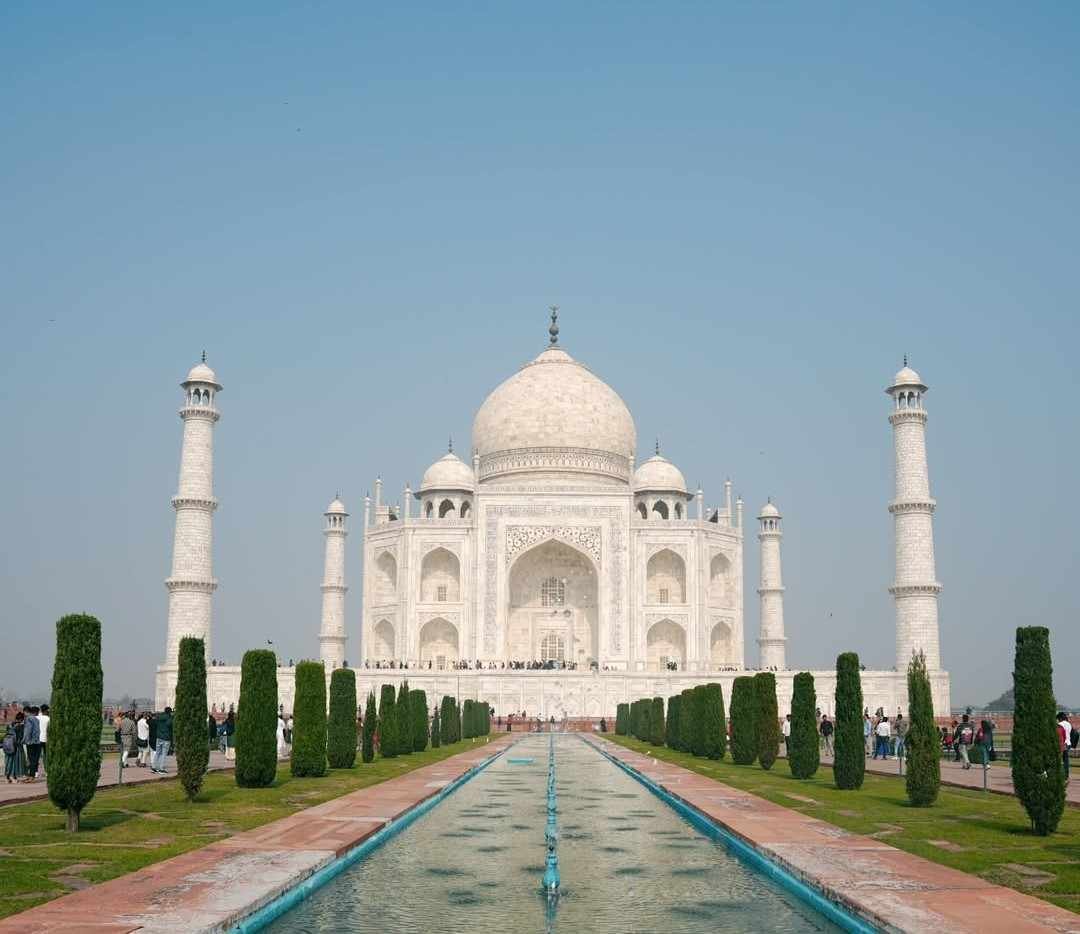
The tour also includes a visit to the world-famous Taj Mahal in Agra, an architectural marvel and eternal symbol of love. From majestic monuments to lively bazaars, sacred temples, serene lakes, and desert landscapes, this heritage tour offers a rich and immersive glimpse into India’s glorious past and vibrant present.
Highlights
- Experience the Vibrant Pushkar Camel Fair – Witness one of the world’s largest camel and livestock fairs, complete with folk performances, competitions, and spiritual rituals.
- Explore the Royal Cities of Rajasthan – Discover the majestic forts and palaces of Jaipur, Jodhpur, and Udaipur, steeped in Rajput grandeur.
- Boat Ride on Lake Pichola, Udaipur – Enjoy serene views of the City Palace and Jag Mandir during a peaceful sunset cruise.
- Visit the Iconic Amber Fort – Take an unforgettable trip to this hilltop fort, known for its artistic blend of Hindu and Mughal architecture.
- Spiritual Immersion in Pushkar – Visit the sacred Brahma Temple and witness the holy rituals at Pushkar Lake.
- Wander Through Traditional Bazaars – Shop for Rajasthani textiles, jewelry, handicrafts, and spices in colorful local markets.
- Admire the Majestic Taj Mahal – Marvel at the world-renowned symbol of love in Agra, a highlight of any India tour.
- Capture Desert Landscapes & Cultural Performances – Enjoy desert views, local music, and traditional dances.
- Stay in Heritage Hotels – Relish royal hospitality in hand-picked heritage properties that offer authentic charm and comfort.
- Expert-Guided Cultural Insights – Gain deep knowledge of history, architecture, and local traditions from experienced guides.
Itinerary
Your journey begins as you land at Delhi International Airport. Here, our friendly representative will meet you and take you to your hotel. Delhi, the capital of India, is a bustling metropolis, second only to Mumbai. With a history that spans over 3,000 years, this city has been home to seven great cities, each contributing to its rich cultural heritage and stunning architecture. The impressive buildings in Delhi, influenced by ancient Istanbul, Rome, and Athens, create a unique atmosphere that beautifully marries the old and the new. Experience the vibrancy of its lively bazaars and historic landmarks. Overnight in Delhi.
On your first full day, we’ll dive into both Old and New Delhi. Our adventure starts at the iconic Red Fort, a UNESCO World Heritage site. As you stand before its towering 100-foot red sandstone walls, you'll feel the history of this 17th-century fort come alive. Inside, you’ll discover exquisite marble palaces, vast pavilions, and a museum that offers a glimpse into the city’s past. Just across from the fort lies the famous Jama Masjid, built in 1656. This stunning mosque, made of marble and red sandstone, is the largest in India, with room for over 20,000 worshippers.
The best way to feel the soul of a city is by walking its streets, and that's just what we’ll do next. Hop on a bicycle rickshaw and join us for a guided walk through the bustling heart of Old Delhi. From the grand Jama Masjid to the lively maze of Chandni Chowk, every turn reveals a new story. You'll marvel as your rickshaw driver expertly maneuvers through tight spaces, using his voice to clear the way while sharing fascinating stories about the sights around you.
As we reach the bustling heart of the market, you'll be immersed in the lively atmosphere filled with vendors selling everything from fresh fruits and vegetables to handcrafted goods. The excitement of bargaining fills the air as buyers and sellers haggled over prices, creating a colorful and lively experience at every turn.
On the ground, there are no kiosks or shops in sight. Look up, and you'll see a jumble of wires hanging from the power poles, almost as if they are working as hard as the people below. Although it might feel a bit overwhelming at first, rest assured, it’s completely safe. Keep an open mind and soak in the sounds of vendors calling out to invite you to shop. The atmosphere is similar to many traditional markets across India.
Next, we transition from tradition to modernity in New Delhi, which carries the legacy of the British Raj. This part of the city showcases its contemporary side. We start our tour at India Gate, a monument built to honor Indian soldiers who fought alongside the British during World War I and the Afghan War. From there, we’ll drive past the President’s House, known as Rashtrapati Bhavan, and the impressive Parliament Building, crafted by British architect Edwin Lutyens.
Our journey continues to Qutub Minar, a stunning 234-foot minaret made entirely of sandstone. This UNESCO World Heritage Site is one of India’s seven wonders. Standing tall as the tallest minaret in the country, it beautifully showcases Indo-Islamic architecture with intricate terra-cotta designs. Right next to it is the Quwwat-ul-Islam Masjid, which dates back to the 12th century and is regarded as India's first Islamic mosque. The mosque was built on the ruins of a Hindu temple, using materials from 27 Jain and Hindu temples that were destroyed by the ruling Mughal emperor of that time.
We wrap up the day by paying our respects at the beautiful Laxmi Narayan Temple, also known as the Birla Temple, named after the famous industrialist family that constructed it. This temple is notable for being one of the first to break the caste barrier in India. When Mahatma Gandhi inaugurated the temple, he brought along a Harijan (a person from a lower caste) as a condition for the ceremony. We will spend the night in Delhi.
After enjoying a hearty breakfast, we set off for the Shekhawati region, ready to explore the charming town of Mandawa, known for its stunning old mansions adorned with intricate paintings. This part of our Pushkar India Trip promises to be both relaxing and beautiful. Once we arrive in Mandawa, we’ll drop our bags at the hotel and venture out for sightseeing after lunch.
Our first stop is the town of Mandawa, famous for its havelis—grand mansions that are 150 to 200 years old. These magnificent homes reflect the wealth of Shekhawati merchants who gained prosperity through trading opium and spices, leading to their luxurious lifestyles. Enclosed by sturdy walls, these historical trading houses reveal large courtyards, and it's clear that aesthetics were a priority for the merchants. The walls are beautifully painted, showcasing scenes from ancient Hindu mythology and vibrant floral designs reminiscent of the Moghul style. You'll even see representations of British innovations, like cars and bicycles, captured in the murals. These stunning artworks, made with natural paints, truly encapsulate the era. Some of the must-visit havelis include Ladia Haveli, Dedraj Turmal Haveli, Ladhuram Tarkesva, and the beautifully adorned Goenka Haveli.
Next, we’ll explore Mandawa Fort, where each corner reveals something special. Take a moment to appreciate the intricate details, such as the peacock design on the weather vane and the elegantly arched windows. During the tour, your guide will point out the uniqueness of each room. Discover spaces once occupied by noblewomen; one room might feature a stunning marble fountain, while another could showcase jaw-dropping murals. Don't miss the turret with its impressive seven-foot thick walls, where you can watch the villagers go about their daily routines.
Tonight, we’ll be staying in the lovely Mandawa Castle, a hotel that dates back to 1755. Take your time here, exploring the various murals and an impressive collection of antiquities, including armor, royal costumes, and 1820 cannons. If you’re intrigued by history, don’t forget to check out the ancient coin collection displayed in the castle. Your stay in Mandawa promises to be truly royal, complete with delightful folk dances and songs in the evening as we enjoy dinner.
Today, we leave Mandawa and set out for the stunning Khimsar Fort, nestled in the heart of the Thar Desert. This place captures the essence of rural India, untouched and beautiful. Built in the 16th century, Khimsar Fort captivates with its towering turrets, sturdy walls, and graceful domes - a true testament to Rajput grandeur. The fort's rich history is evident in every stone, telling tales of battles long past. Today, it operates as a heritage hotel, maintained by the same family for over 21 generations.
The drive to the fort is a remarkable experience. You'll pass by picturesque sand dunes and witness daily life in the countryside, with oxen pulling carts and flocks of sheep roaming freely. It's a scene that feels straight out of a painting, especially when you see women in colorful saris carrying water under the bright sun.
Once we arrive, we settle into the Heritage Hotel Khimsar Fort. This splendid 450-year-old fort is in fantastic shape and is still home to the royal family that once ruled this area. You’ll be charmed by the spacious courtyards and the beautiful surroundings of your accommodations, complete with stunning stone carvings and intricate arches that evoke a royal atmosphere.
The rooms maintain much of their original structure and are furnished with antique pieces that are nearly a century old. Dining in the fort's tower will be a memorable treat. The hotel offers various amenities, including a swimming pool, a tennis court, a health club, and a sauna. You can also dine at the multi-cuisine restaurant or grab a drink at the bar. Don’t miss the Khimsar garage, where you can admire a collection of vintage cars.
Spend your afternoon at leisure, soaking in the surroundings or exploring the area at your own pace. You may want to join a jeep safari, remember to bring your camera for capturing the local wildlife, including the striking black bucks and spotted deer. We can also take a stroll through the vibrant nearby village before heading back to the hotel. The fort's architecture, combined with its lovely gardens and playful peacocks, provides a great spot to relax. Enjoy sipping tea on the veranda while soaking in the views.
The rural charm of Khimsar Village is unforgettable. You can enjoy a camel ride across the vast sandy landscape in the early evening, when the sun is less intense. Watch as the golden light of dusk stretches across the horizon, transforming the colorful desert women into silhouettes against the vibrant dunes. Later this evening, you can enjoy a captivating Rajasthani puppet show accompanied by traditional music from the Kalbelia Troupe. You'll rest tonight in the majestic Heritage Hotel Khimsar Fort, a true royal experience.
After breakfast, we continue our Pushkar Camel Tour in India, heading to Jodhpur, which is about 90 kilometers away. The drive will take us less than two hours. Once the capital of the Marwar kingdom, Jodhpur is now Rajasthan’s second-largest city, after Jaipur. In the 16th century, it was an important trading hub on the route from Gujarat to China. As we arrive, we are greeted by a massive city wall that stretches 10 kilometers around the city, along with the impressive Meherangarh Fort.
Once we check into our hotel and freshen up, we head to Meherangarh Fort. This magnificent fort towers over the city and is built of sturdy stone. It was established in 1459 and, according to legend, has never been captured despite many attempts by enemies. Standing on the fort’s ramparts, you'll notice the old houses and homes of priests painted in blue, giving the town its nickname, the “Blue City.”
Inside the fort, there's a fascinating museum filled with artifacts from the Rajput and Mughal kings. You can see Akbar’s sword, a beautiful octagonal throne, ivory elephant saddles, silver litters and palanquins, princely cradles, howdahs, and an extensive collection of weapons.
Our next stop is Jaswant Thada, a beautiful marble memorial built in 1899 in honor of Maharaja Jaswant Singh II. Then, we head to Umaid Bhawan Palace, a 5-star heritage hotel that was originally constructed to provide shelter for the 3,000 farmers in the kingdom who were affected by famine in the 20th century.
It's time for lunch, and after that, we continue exploring Jodhpur with a jeep safari to a village of the Bishnoi tribe. Our ride takes us through areas filled with khejri trees and sand dunes, where we might spot blackbucks and Indian gazelles. The Bishnoi people hold a deep respect for both trees and animals; they even bury dead gazelles and mark their graves. The name Bishnoi translates to "twenty-niners," reflecting the 29 principles they live by, which emphasize protecting Mother Nature. These principles date back to the 15th century, making them some of the earliest environmentalists known.
While in the village, we visit one of the tribal homes and enjoy a cup of tea with the families, who are mainly farmers and strict vegetarians. You might also be invited to join in an opium ceremony. We'll stay overnight in Jodhpur.
We’re heading towards Udaipur, making a stop at the famous Jain temples in Ranakpur. As we continue our journey through the Pushkar Fair Tour, we travel east into the Aravali Hills. The scenery changes as we move from bare hilltops to green valleys, and in one of those valleys, we find Ranakpur. This area is home to one of the most respected Jain temples, known for its 1,444 columns, each with its own intricate design. The entire structure is made of fine marble, reflecting the craftsmanship of its era. After enjoying lunch in this peaceful area, we’ll set off again towards Udaipur.
Udaipur, known as the 'City of Sunrise,' is surrounded by serene hills and sparkling lakes. Founded by Maharana Udai Singh, this enchanting city sits beside the beautiful man-made Lake Pichola, which spans 12 miles in length and 9 miles in width. In the heart of Pichola Lake, there are two picturesque island palaces: Jag Niwas and Jag Mandir. Jag Mandir features a lovely blend of Rajput and Mughal architecture and is said to have inspired the design of the Taj Mahal. Jag Niwas, built in 1740, was once a royal summer retreat and became a hotel in 1963. Now known as the Lake Palace Hotel, it’s managed by the well-respected Taj Group of Hotels and has appeared in popular films like Der Tiger von Eschnapur and Octopussy. You’ll have a delightful two-night stay in beautiful Udaipur. Enjoy your overnight stay!
Today marks our last day before the Pushkar Camel Tour kicks off, and it's set to be filled with amazing sights. We start at the City Palace, the largest of its kind in the area and once home to the Maharana. Set along the tranquil Pichola Lake, Udaipur is a stunning showcase of architectural brilliance and regal charm. The palace consists of four parts: three are hotels - Jagdish Niwas, Fateh Sagar, and Shiv Nivas - and one is a museum. Part of the palace is still occupied by the Maharana of Udaipur's royal family. From the higher levels of the palace, you'll get stunning views of Udaipur's beauty, including the breathtaking Lake Palace Hotel and Pichola Lake. The museum showcases artefacts used by the Maharanas and lovely miniature paintings.
Next, we head to Jagdish Temple, a place of great significance for Hindus. The temple buzzes with devotees, especially during the early morning and late evening rituals. The area outside is lively with vendors selling flowers and other offerings. You can explore the inside of the temple, but the outer structure, with its detailed carvings, is definitely worth admiring.
After this, we visit Sahelion-ki-Bari, the garden of the beautiful lady friends. Before we head back to our hotel, we take a relaxing boat ride on Pichola Lake, enjoying the view of the people along the ghats and the Lake Palace Hotel from a different perspective.
In the evening, we unwind at the Sunset Terrace of Fateh Prakash Palace Hotel, arguably the most romantic spot in Udaipur. This terrace is a central part of the hotel and is well-loved by those who enjoy the finer things in life. Watch as Lake Pichola transforms with the colors of the sunset. The City Palace Complex slowly disappears into the night, creating a magical scene. Treat yourself to a delicious array of food while listening to live music in this enchanting setting.
Today, we dive into the vibrant world of Pushkar, one of the oldest and holiest places for Hindus in India. Normally a quiet town, Pushkar bursts into life during its annual cattle fair, filled with celebrations at every corner. This incredible event blends religion, trade, and entertainment all in one spot. The fair takes place every October or November, depending on the moon's position, which is considered a lucky time. People from all walks of life gather here, some are curious visitors, while others come with specific goals in mind. You'll see ascetics, snake charmers, farmers, nomads, showmen, musicians, fortune-tellers, and, of course, the vital cattle traders. It’s as if thousands of camels suddenly appear on the sandy landscape. Devotees flock to the Brahma Temple, praying for freedom from their worldly troubles and making sure to take a dip in the holy waters of Pushkar Lake.
Upon our arrival in Pushkar, we settle into our comfortable “luxurious” tents—an experience unlike any other. After getting settled, we set off to explore the lively fairgrounds. A guide will be with you to point out highlights. You'll be amazed at the diversity of people visiting the fair. Their ways of worship, clothing, and languages showcase a beautiful mix of cultures. Here, people from different backgrounds come together for a shared purpose.
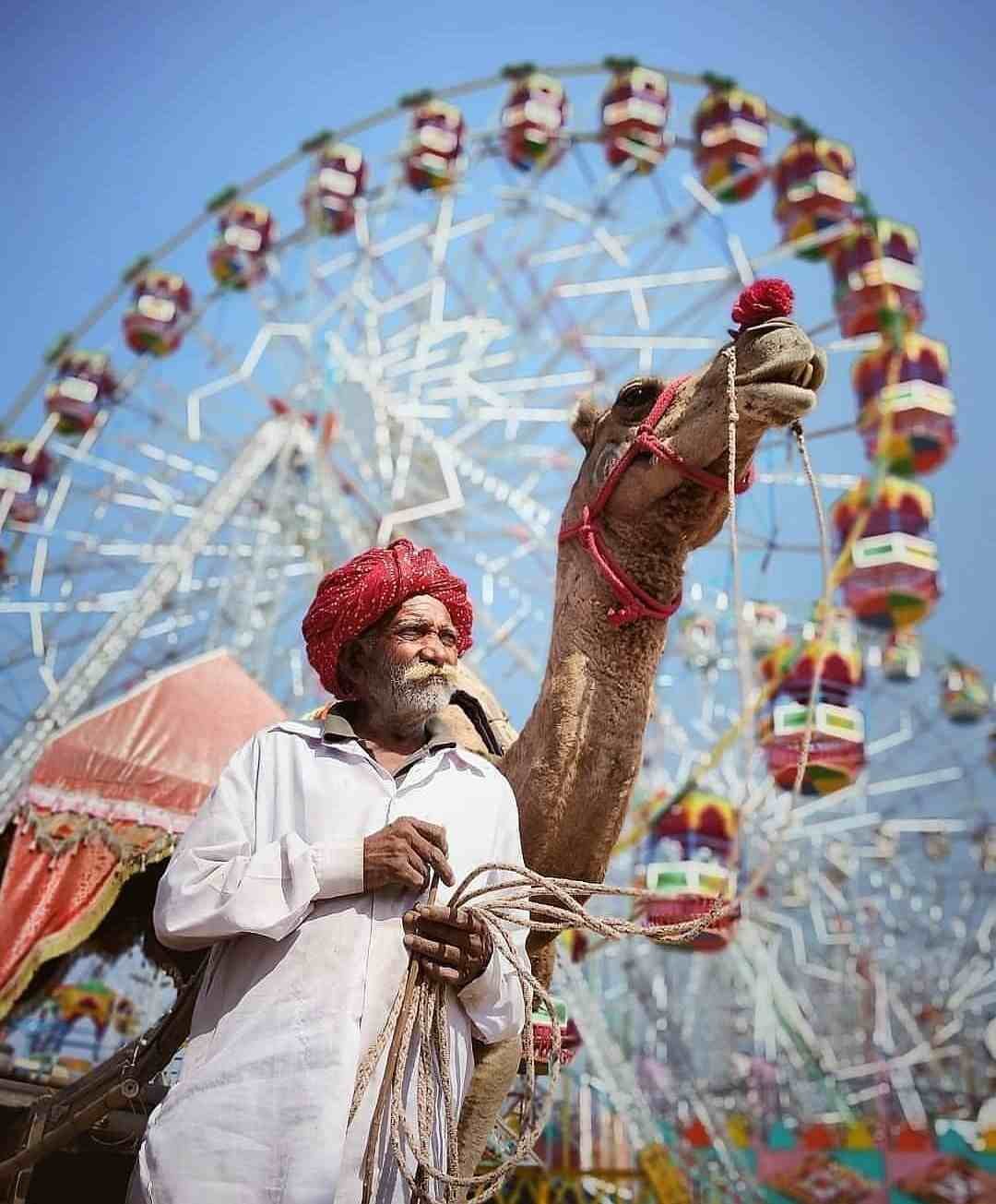
As we explore, you’ll discover countless makeshift stalls selling everything from silver crafts and bells to embroidered textiles and vibrant paintings. The choices are endless! You might even spot a Ferris wheel, filled with excited riders, while traditional folk artists perform lively dances, lost in the rhythm. The celebration continues well into the evening, and we’ll enjoy a delicious dinner while watching people dance to folk tunes all around us.
Here are some important details about your Pushkar Camel Tour:
✔ You’ll be staying in luxurious tented accommodations set amidst beautiful fields of roses and Indian gooseberries.
✔ Enjoy easy travel on camels, camel carts, or even tractors, taking you to the fairgrounds as often as you like.
✔ We'll handle all your meals—breakfast, and dinner—while you're at the fair.
✔ Since Pushkar is a sacred place for Hindus, no non-vegetarian food or alcohol can be served. However, if you’d like to enjoy some drinks, feel free to bring your own and enjoy them in the privacy of your accommodation.
After breakfast, we’ll hop on our camels and head to the lively Pushkar Fair grounds, where you'll find excitement at every turn, especially centered around camels. You can watch fun camel contests such as camel dancing, the best haircut, a beauty pageant, and thrilling camel races. The fair also features a variety of traditional music and dance performances, as well as political speeches.
You won't feel out of place at the Pushkar Fair! The friendly locals will warmly welcome you, inviting you to join in exciting matches like tug-of-war or kabaddi between foreigners and Indians. There's even a special turban-tying contest just for visitors. Some other fun competitions include the “Matka Phod,” where you break a pot while blindfolded, a bridal competition, and a mustache exhibition. Don’t worry if you notice a few sadhus or gypsies following you. They might just think you want to take a picture with them, and they’ll appreciate a little generosity from your side.
Encircling Pushkar Lake are numerous ancient temples and peaceful hermitages, ideal for a serene evening stroll. Along its edge lie 52 sacred ghats, stone steps leading into the holy waters - where devotees and sadhus gather for daily rituals. The air hums with spiritual energy, as the gentle rhythm of Vedic chants and faint strains of devotional music fill the surroundings. You can watch as worshippers deeply immerse themselves in rituals to honor the gods. As evening falls, the lake transforms beautifully; devotees traditionally release oil lamps on leaf plates, creating a breathtaking sight as hundreds of lights float across the water, a memory that will stay with you forever. Pushkar is also home to the only Brahma Temple in India, as Hindus believe Brahma is the universe's creator.
At the end of the day, you’ll enjoy a restful night in luxury tented accommodation in Pushkar.
As dawn rises over Pushkar, we take a final, peaceful glance at its serene beauty before continuing our journey. If you enjoy morning walks, don't miss this chance! We’ll hike to Ratnagiri Hill to visit the Savitri Temple at dawn, where you’ll be treated to a stunning 360-degree view of the lake, desert, city, and fair. After our walk and a hearty breakfast, we’ll set off for Jaipur, known as the "Pink City."
Jaipur means the City of Victory in English, and it's filled with incredible architectural wonders in great condition. From forts perched on hilltops to bustling bazaars and royal accommodations, there's so much to explore. You'll find lively traditional markets alongside modern shopping malls, perfect for picking up Rajasthani gems, textiles, crafts, and other amazing souvenirs.
We arrive in Jaipur late in the morning or early afternoon and set off on a half-day city tour. Our first stop is the Hawa Mahal, also known as the Palace of Winds. This stunning 18th-century, five-story building has an astonishing 953 windows. It’s said that noble women would use these windows to watch city processions while staying out of sight from the public.
Our next stop is Jaipur’s iconic City Palace, an architectural masterpiece built in 1734 and nestled in the heart of the Pink City, this palace is a testament to the architectural skill of the Maharajas. The complex is filled with beautiful decorative art and paintings, surrounded by lush gardens, intricately carved doorways, and grand courtyards that will leave you mesmerized. The City Palace also features a museum showcasing the region's history through impressive armory, manuscripts, miniature paintings, carpets, and various royal artifacts.
Our journey continues at Jantar Mantar, an observatory built in the early 18th century by Maharaja Jai Singh. Created in the 1720s, this place reflects the Maharaja’s passion for astronomy and is one of five such marvels he commissioned. Many of the large instruments here still function effectively today.
Jaipur beautifully blends the old with the new, much like Delhi. In the markets, you’ll find modern gadgets alongside traditional items. You’ll also notice that contemporary transportation modes coexist with the older ones still in use. The charm of the past is well preserved within the city's walls, which also serve as a playground for local monkeys. The walking tour is designed to give you great insights into the rich offerings of both old and new Jaipur. Each street has something special waiting for you.
We wrap up our day with a masala chai, spiced tea, at a popular local spot, feel free to indulge in some local snacks too. This marks the end of another exciting day on your Pushkar Fair Tour. We’ll spend the night in Jaipur.
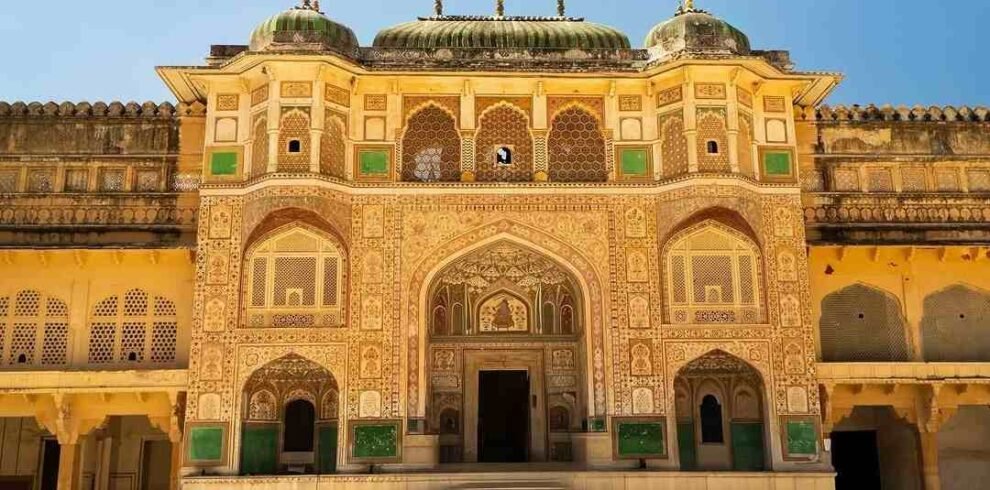
Your day in the beautiful city of Jaipur starts with a trip to the Amber Fort. Like many forts in Rajasthan, Amber Fort sits high on a hill. Getting there will be an adventure as you'll ride on an elephant, just like the kings of the past. The elephant is beautifully adorned with a decorative saddle and coverings. This 18th-century fort is stunning and provides a fantastic view of the city below. As you walk through the well-crafted paths leading into the fort, you can feel its grandeur growing. The arches and walls offer a glimpse into the rich history that Jaipur holds, showcasing a blend of Rajput and Hindu architectural styles.
Next, you’ll visit Sukh Mandir, or the Palace of Pleasure, which truly lives up to its name. Here, you can feel the cool breeze refreshing your senses. Sukh Mandir is another beautiful structure in Jaipur, known for its elegant design and peaceful ambiance.The coolness you experience comes from the gentle winds flowing through the water cascades within the fort. Be sure to admire the intricate ivory-sandalwood door, it's a sight to behold! When you step into the Mirror Palace, you’ll be captivated by the exquisite Rajput artwork. The walls are adorned with beautiful glass flowers and paintings, and a single lamp in the center of the room sparkles like a thousand stars in this reflective glass palace.
Afterward, we head to the Jal Mahal, or Water Palace, which appears to float on the lovely Man Sagar Lake, giving the illusion of a magical place. You'll find yourself constantly amazed by the architectural talent of the Rajputs.
Finally, it's time to visit the Albert Hall Museum, the oldest museum in the city. This 19th-century building made of red sandstone and marble is a true treasure. Designed in the Indo-Saracenic style by Sir Samuel Swinton Jacob, this structure is a remarkable fusion of Indian and Victorian architecture - one of the earliest of its kind. He also designed the Rambagh Palace, which is now a luxurious Taj Hotel. The museum is named after Prince Albert, who later became known as Edward VII. It was constructed to honor the Prince during his visit to New Jaipur, a city established in the late 1880s. Inside the museum, you'll find a stunning collection of miniature paintings, folk arts, traditional clothing, pottery, textiles, musical instruments, and fascinating artifacts made from ivory and marble, all showcasing the rich traditions and culture of India.
After noon, you have some free time to relax by the pool or indulge in a bit of shopping. Overnight at Jaipur.
On this day of our Pushkar India Trip, we leave Rajasthan with heavy hearts as we head to Agra, making a stop at Fatehpur Sikri along the way. Agra was the capital of the Mughal Empire from the 16th to 17th centuries, ruled by notable emperors like Akbar, Jahangir, and Shah Jahan. These rulers had a passion for grand architecture, bringing in skilled artisans from distant lands in Central Asia and Persia, and their impressive works still stand in Agra today.
Just 22 miles before Agra, we come across Fatehpur Sikri, often referred to as the Deserted City or Ghost Town of the Mughal Empire. This historic site was founded by the great Akbar in 1569. As we wander through its ancient streets, we can see the remnants of Kos Minars (wayside markers) and various architectural marvels. It is said that Akbar built this city to honor a sage who predicted the birth of his three sons. However, due to administrative needs, the capital was later moved to Lahore (now in Pakistan) and eventually back to Agra. One reason for abandoning Fatehpur Sikri as the capital was the severe shortage of water.Though it was the Mughal capital for just 13 years, its palaces and courtyards still echo the city’s short-lived glory.
We continue our journey and arrive at the Agra Fort, a UNESCO World Heritage site. Akbar began building this grand sandstone fort in 1565, and it was later finished by his son. Over the years, additional embellishments and fortifications have enhanced its beauty. The result is a stunning fort that features beautiful courtyards by the riverfront, each reflecting the unique style of the emperor who built it. As you take a leisurely walk through the various courtyards, lavish halls, and pavilions, there is so much to discover. From here, you’ll catch your first glimpse of the magnificent Taj Mahal in the distance. Your Pushkar Camel Tour India is nearing its end, and you’ll spend the night in Agra.
This morning, we will explore the timeless beauty of the Taj Mahal, India’s most iconic monument. Built by Mughal Emperor Shah Jahan in memory of his beloved queen, Mumtaz, this breathtaking structure is a true marvel. Take your time exploring the Taj Mahal complex and admire the beauty and symmetry of the monument. It took 22 years and the efforts of 20,000 skilled workers to create this masterpiece, which was completed in 1653. In the early morning hours, the Taj Mahal showcases a stunning display of colors as the sun rises, making it the perfect time to experience its beauty.
After soaking in the sights of the Taj Mahal, it’s time to head back to your hotel for breakfast. You’ll have some time to explore more of Agra before we travel to New Delhi. You’ll be transferred to Delhi International Airport for your flight home. Along the way, you’ll have experienced some of the most spectacular structures in the world and immersed yourself in the vibrant local culture. The sweet memories of your amazing Pushkar India Trip will stay with you for a lifetime.
Cost
The Cost Includes
- Stay for 12 nights in a comfortable double Sharing room at carefully selected hotels based on your chosen category
- Begin each day with a delicious breakfast and Dinner included ( Except, Day 1 you will get Dinner only and Day 13 you will get Breakfast)
- Benefit from a high-quality air-conditioned car with a driver available for your entire stay
- Receive knowledgeable assistance from local guides
- Convenient airport transfers to and from the hotel
- Gain entry to all attractions specified in the tour program
- Enjoy a boat ride on the picturesque Lake Pichola in Udaipur
- Take an elephant ride or Jeep to the majestic Amber Fort in Jaipur
- Experience a camel ride in the enchanting desert at Khimsar
- Explore the historic pink city of Jaipur on a guided walk
- Navigate the bustling streets of Old Delhi with a fun rickshaw ride
- Have peace of mind with 24-hour contact support while in India
- Parking, tolls and driver allowance are included
The Cost Excludes
- International flights
- Lunch and any personal expenses related to food or other reasons
- Any other expenses not mentioned in the Inclusions list
- Visa and insurance
- 5% GST Tax
- Personal expenses such as tips, laundry, telephone or fax charges, alcoholic beverages, camera/video camera fees at monuments, medical expenses, etc., will be at your own cost
FAQs
It’s a famous annual fair in Pushkar where thousands of camels, horses, and cattle are traded. It also features cultural events, folk performances, and traditional competitions.
The fair usually takes place in November, during the full moon (Kartik Purnima). The exact dates vary each year.
The tour is usually 12 to 15 days, depending on the cities and experiences you choose to include.
Common destinations include Delhi, Jaipur, Jodhpur, Udaipur, Pushkar, and sometimes Agra for the Taj Mahal.
Yes, the tour is family-friendly and comfortable for all ages. The itinerary can be customized to suit your pace.
You’ll stay in heritage hotels, palaces, and comfortable resorts that reflect Rajasthan’s royal charm.
The weather in November is pleasant, with warm days and cooler nights, ideal for sightseeing and outdoor activities.
Highlights include forts and palaces, camel rides, traditional villages, colorful markets, and attending the vibrant Pushkar Fair.
Most tours include daily breakfast, and some may offer dinner, especially during desert or village stays.
Yes, You can add or skip destinations, upgrade hotels, or include extra experiences like a hot air balloon ride or a desert safari.